



Fiber vs. Cable Internet: What’s the Difference?
These days, it’s hard to run a business or operate a public agency without a high-speed internet connection.
And it’s more than just writing emails and web browsing. Nowadays an internet connection is essential for running point-of-sale systems, connecting teams to cloud apps, powering virtual meetings and voice calls, supporting guest WiFi, and uploading, downloading, and backing up important data.
More businesses and agencies are also using AI-powered tools in their day-to-day work, which can mean more activity online and greater need for bandwidth.
That makes choosing the right type of internet connection a big decision. The most common options are fiber and cable internet. Both can provide fast connectivity, but they work differently—and understanding those differences can help you decide which one makes sense for your organization.
Here’s what to consider when choosing between fiber and cable internet.
The Basics of Fiber and Cable Internet
Fiber internet sends data as pulses of light through fiber-optic cables. That technology allows fiber to support fast, symmetrical speeds for both downloading and uploading data—which means your upload and download speeds are the same. This is handy when you’re downloading documents, having virtual meetings, using cloud applications, or sharing large files.
Fiber-optic technology is also less likely to be disrupted by outside factors like weather or construction—which make performance and reliability more consistent.
Cable internet sends data using electrical signals over coaxial copper cables, the same type of cable used for cable television. Cable is more widely available and offers fast download speeds, but it typically has much slower upload speeds. That becomes most noticeable if you regularly upload large files, back up data to the cloud, or spend a lot of time on video conference calls.
Cable connections also commonly share available capacity with other customers in the area, so performance can fluctuate when a lot of people are using the network at the same time.
Finding the Right Fit for You
Both fiber and cable can keep your business or agency connected. The right fit depends on what a typical workday looks like for you online, and how much you need your connection to handle at once.
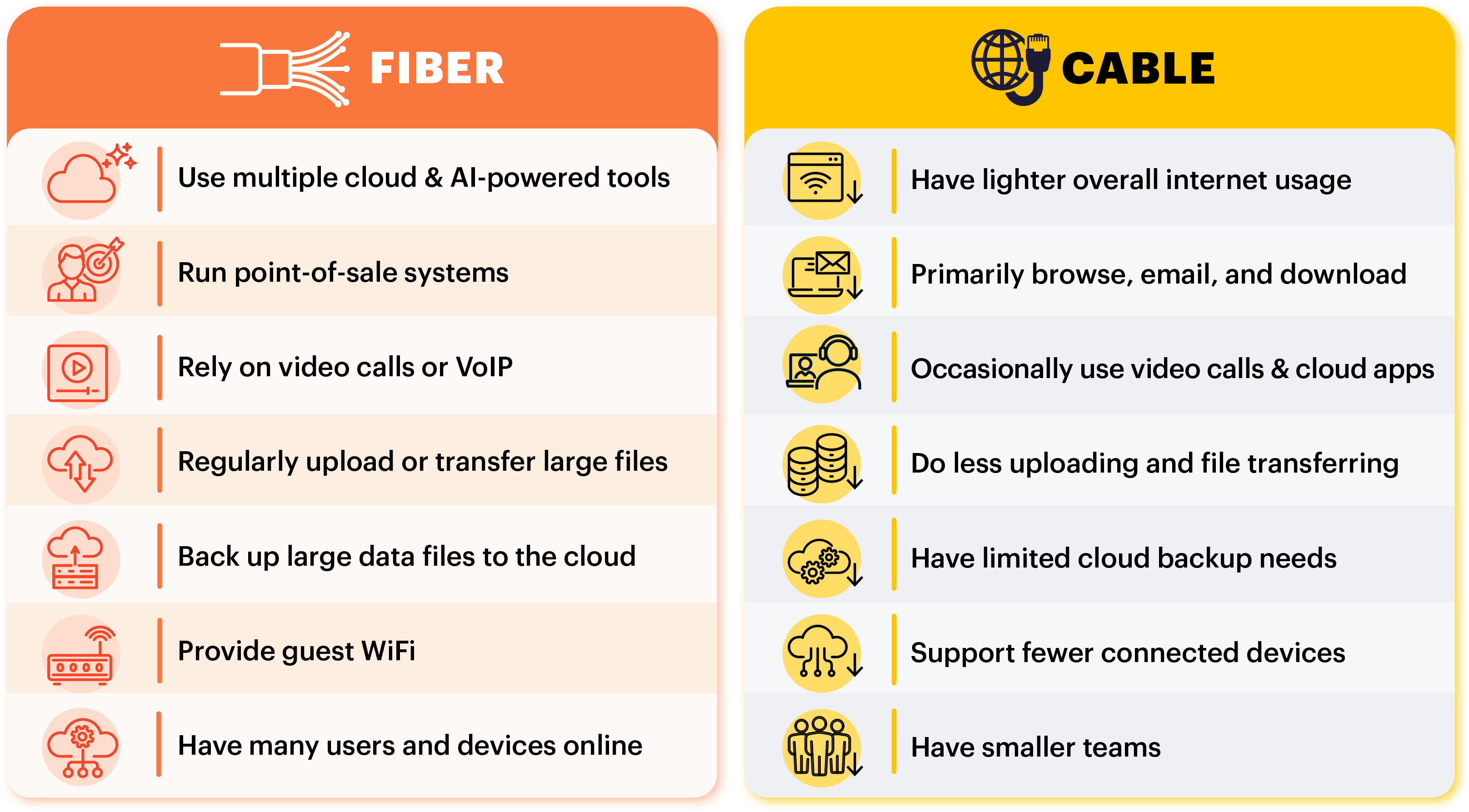
Fiber is most useful for organizations that have a lot happening online throughout the workday. Your teams might be making video calls while using cloud applications, AI-powered tools, uploading files, or making internet-based phone calls. At the same time, customers could be using guest WiFi while transactions are running through a point-of-sale system.
When all of those activities are happening at once and relying on the same connection, it’s vital to have the right speed and capacity to support them.
Cable can make sense for businesses and agencies with more straightforward internet needs. Maybe you have a smaller team that primarily uses email, browses the web, works in a few cloud applications, and downloads files throughout the day. If you don’t do a lot of uploading, have fewer devices connected at once, and don’t regularly move or back up large amounts of data, cable could be the right connectivity choice.
Here’s a quick way to gauge which option could match your everyday internet needs:
How Costs and Speed Compare
Another factor to consider when comparing fiber and cable internet is the cost per Mbps (megabits per second). Internet speeds are typically measured in Mbps or Gbps (gigabits per second), with 1 Gbps equal to 1,000 Mbps. The higher the speed, the more data your connection can move at once.
However, price and speed alone don’t determine value. Your day-to-day operations matter too. For example, a smaller office with only a few connected devices and light online activities may be able to function comfortably with speeds in the 100-500 Mbps range. A larger or busier office with more connected devices and several online activities happening at once may benefit from 1 Gbps or more.
Here’s an example of how the cost per Mbps can compare between fiber and cable at different speeds:
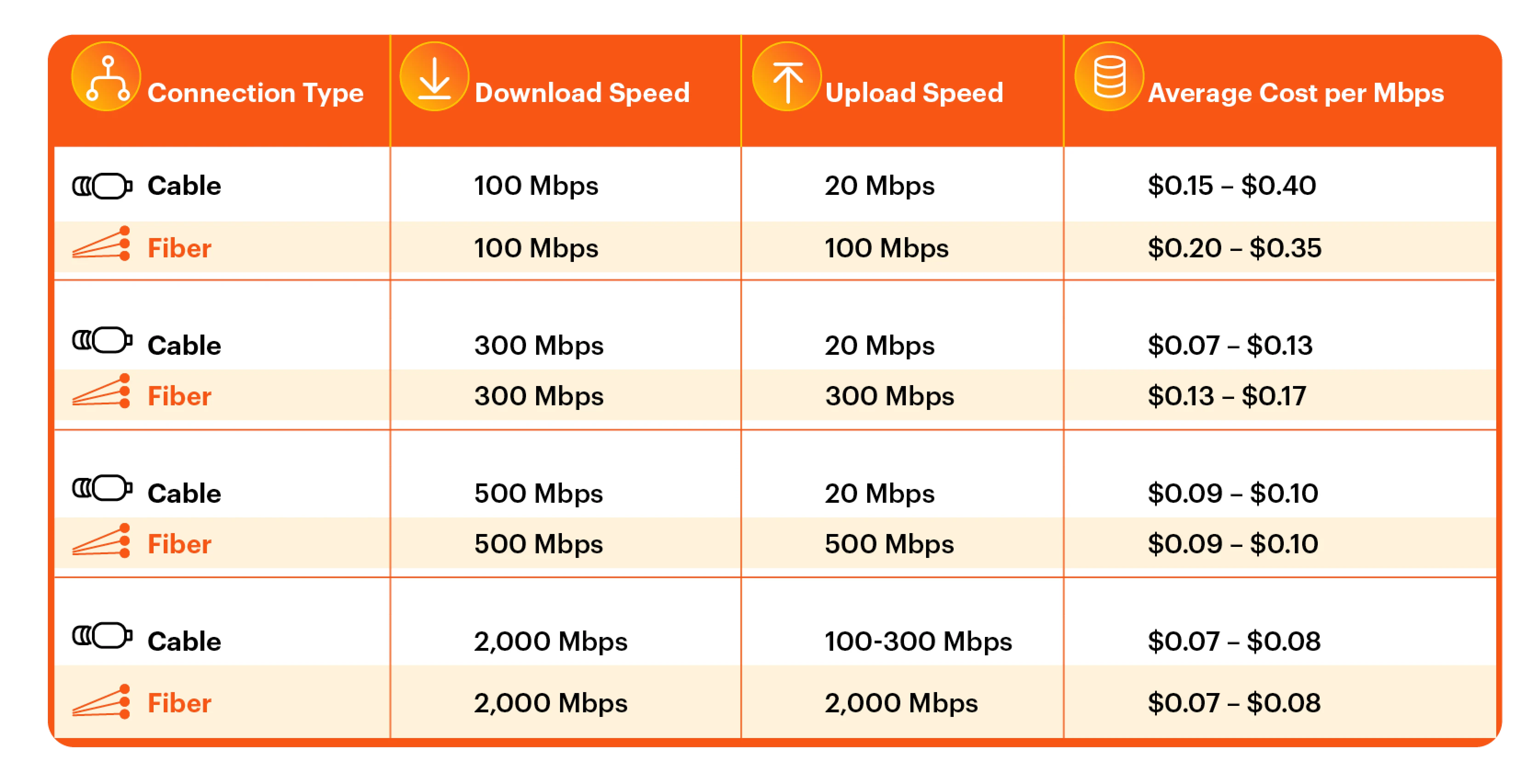
In these examples, the key difference is performance. Cable provides fast download speeds but typically has slower upload speeds. Fiber offers symmetrical speeds, which gives you equally fast uploads and downloads. So even at the same speed and monthly price, you may get more for your money depending on your business or agency’s connectivity needs.
Other Factors to Consider
Internet speed and costs are important, but they’re not the only items to pay attention to when looking at fiber and cable internet.
Reliability and consistency are necessary too. If cloud applications, point-of-sale systems, VoIP, or other online tools are part of your everyday operations, a slowdown can have a ripple effect on productivity and day-to-day operations.
It’s also worth understanding if your connection shares capacity with other customers. Shared capacity means multiple customers in the same area are online and using some of the same network resources at the same time. When demand is high, performance can slow down. Cable uses shared capacity, while fiber can be either shared or dedicated to a single customer.
Think About Your Future Internet Needs
Your internet connection needs to work for how you operate today—but it’s also worth thinking about where your business or agency could be a few years from now.
Do you plan to add more locations, hire more employees, use more cloud apps, bring on AI-powered tools, add more connected devices, or move more data to the cloud? As you take on more data-intensive activities and rely more heavily on your network, your connectivity needs will grow too.
That’s where scalability makes a difference. As your organization grows and technology needs change, you’ll want connectivity that can keep up. Planning ahead can help you choose a connection that works for you now without overlooking what you may need down the road.
The Right Fit Depends on How You Work
Both fiber and cable can keep organizations connected, but they work differently—and deciding between the two depends on how you use your internet.
Cable can be a practical choice for offices with lighter internet needs, while fiber may be better fit for larger businesses or agencies with more demanding needs like fast uploads, symmetrical speeds, consistent performance, reliability, and support for many online activities happening at the same time.
Ultimately, the right connection is the one that best fits the day-to-day needs for your office today and how it can support your operations in the future.