


What internet speed do you really need in your new home?
Moving? Whether it’s new construction or a vintage apartment, you’re going to need an internet connection. But how much speed do you actually need, and how can you avoid paying for more than you’ll use?
Here’s how to choose the right speed and find the best Brightspeed Internet plan for your home.
What does internet speed actually mean?
When an internet provider advertises speeds like 500 Mbps or 1 Gig, they’re referring to the maximum download speed under ideal conditions. In simple terms, internet speed measures how quickly data moves between the internet and your home.
Speed is typically measured in Megabits per second (Mbps). The higher the Mbps, the faster your connection can download music, browse the internet, and stream video in HD. On the other hand, a slower connection may still work for light browsing, but you’re more likely to experience longer download and upload times, lower video quality, and buffering while streaming video or audio.
Internet speed vs. Bandwidth
Internet speed and bandwidth are closely related, and often used interchangeably, but they’re not the same.
- Bandwidth is the total capacity of your connection — how much data can move at once.
- Speed refers to how quickly that data is actually transferred.
Higher bandwidth allows more devices to stream, game, and video chat simultaneously without slowing each other down. This matters in homes with multiple users.
Download speed vs. upload speed
It’s also important to understand the difference between download and upload speeds:
- Download speed is how quickly your device receives data from the internet. Faster download speeds mean smoother streaming, quicker downloads, and better overall performance when browsing or watching high-quality video.
- Upload speed is how quickly your device sends data to the internet. This matters for video calls on Zoom or FaceTime, uploading photos or files, online gaming, and cloud backups.
Many traditional broadband connections have slower upload speeds. Brightspeed Fiber Internet offers symmetrical speeds, meaning uploads and downloads are equally fast.
Check your current internet speed
Not sure what you need? Start with what you’re using now.
Run a free Brightspeed speed test to see your current download and upload speeds. If your connection feels slow, upgrading may help. Read our speed test FAQs for more on how to interpret your results.
How much internet speed do I need?
The internet speed you need depends on how many people are in your home, how many devices are connected, and how you use them. While there’s no one-size-fits-all answer, these guidelines will help you choose the right connection speed.
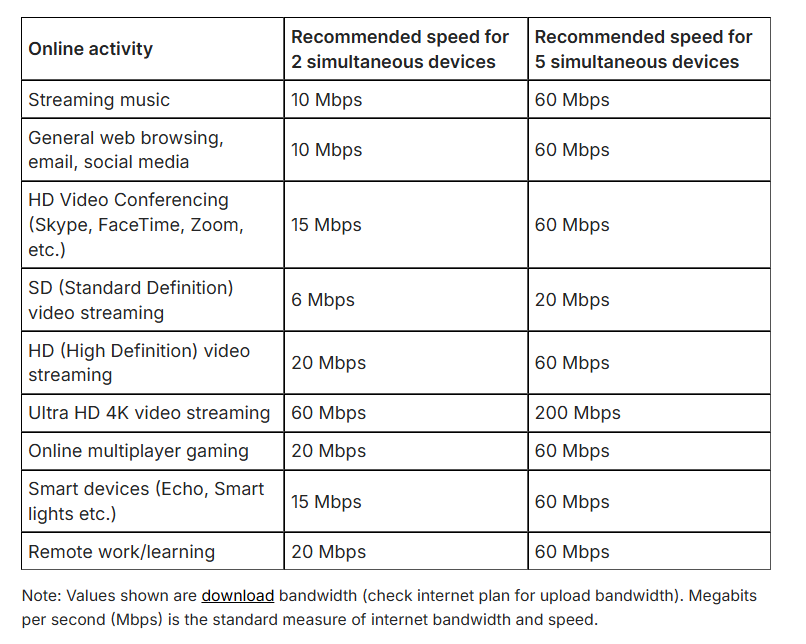
What internet is available in my area?
Availability depends on your address. Even homes on the same street can have different options. Search “internet near me” or check Brightspeed availability directly at www.brightspeed.com or check to see if Brightspeed is available at your address.
Connection type
Not all internet connections work the same way, and the type available at your address sets the ceiling for both speed and reliability. Fiber, cable, DSL, fixed wireless, and satellite each rely on different infrastructure, which affects performance and consistency. Knowing which connection types you can get helps you avoid paying for speeds your home can’t realistically support.
Rural vs. urban area
Urban areas typically have more provider options. Rural areas may have fewer choices, but fiber and fixed wireless continue expanding, including in many Brightspeed service areas.
Internet providers
Internet availability often comes down to which providers serve your specific address. Even nearby homes can have different options. Some areas offer multiple ISPs to choose from, while others may only have one. Compare providers and weigh their available speed tiers, pricing, data caps, and contract terms before committing.
Choosing an internet plan for your new home
When picking an internet plan, it comes down to one question: Do you need faster speeds, or will a basic plan work?
Choose faster internet if:
- Multiple people stream, game, or video chat at once
- You work from home
- You stream in 4K or upload large files
A basic plan may be enough if:
- You mostly browse, email, and stream in HD
- Only 1–2 devices are active at once
- Large downloads are rare
- You want to keep costs lower
Whatever you need from your internet plan, Brightspeed has an option that checks all your boxes. Find out if we’re in your area and explore our moving options so you can hit the ground running with high-speed broadband.